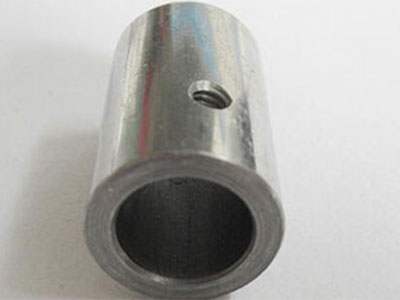
The most common problems and processing difficulties that may occur during the operation of a CNC lathe are as follows:
1. How can the good condition and service life of the cutting tools be determined?
During the automatic processing of the machine tool, it is necessary to listen to the sound during the cutting process, stop the machine for regular checks or touch the cutting tip, and make judgments based on the surface smoothness analysis, etc.!
II. How to reasonably select the appropriate cutting tools based on the material properties?
During the processing, if the tool selection is incorrect, it will lead to unstable processing or even inability to process! Moreover, it will affect efficiency and result in poor quality. Therefore, the selection of tools is very important. When processing materials that are relatively hard, we should choose tools with strong rigidity and large cutting edges. The machine should also be adjusted according to the principles of low rotational speed, slow feed, and less backcutting!
So when processing materials that are relatively soft, such as aluminum alloy, nylon rods, copper, etc.! Then we can appropriately increase the rotational speed, feed rate, backcutting depth, and use corresponding alloy tools! Especially when the feed table is slow, it will cause slag squeezing, entangling the workpiece, and not removing the slag. This will greatly affect the efficiency and quality!
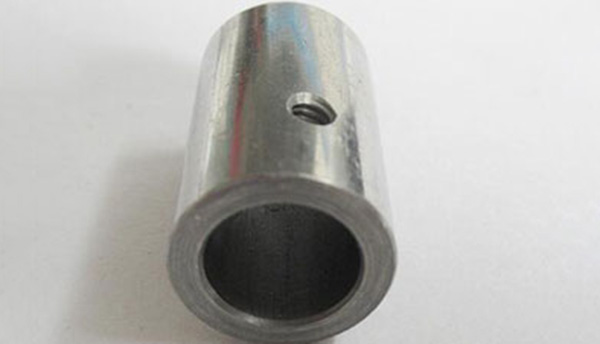
III. What should be done if the process or tool path is not properly arranged, thereby affecting efficiency?
The same knife should not be used repeatedly. If one knife can complete the task, it is not necessary to use a second knife. In cases where conditions permit, the sequence of the knives and the sequence of the procedures must be arranged according to the tool path, in order to minimize the idle travel time and reduce unnecessary positioning errors. If the tool or quality is not affected, the program should be optimized again to achieve the best processing state!
Four. What should we do if deformation occurs when processing thin-walled products?
Such products are a bit challenging. Some may require multiple processes to complete. Based on the product requirements, you can make an analysis and judgment! Be sure to use a low rotational speed, and use a tool with a small tip and a relatively sharp blade. The clamping should also be done as much as possible using axial clamping (such as pressing screws). If using radial clamping, there will always be a deformed state!
Mr. Zhang:+86 135-0969-2053

Mobile website
WeChat Official Account
Copyright © 2026 Dongguan Jiqixing Industrial Co., Ltd. All rights reserved
The web page materials and related resources on this site are all sourced from the Internet. If there is any infringement, please notify us immediately. We will delete them within 24 hours.